I would like to learn and discuss how I can help your child. I am a bilingual therapist offering therapy services for children in Spanish and English.
If these thoughts sound familiar, you’re not alone. As a Latino parent in Denver, you may be watching your child struggle with emotions they can’t express. Whether from trauma counseling needs, immigration stress, or simply growing up between two worlds, your child deserves healing.
Sand tray therapy (terapia de bandeja de arena) offers a safe, non-verbal way for children and families to process emotions through the universal language of play and symbols.
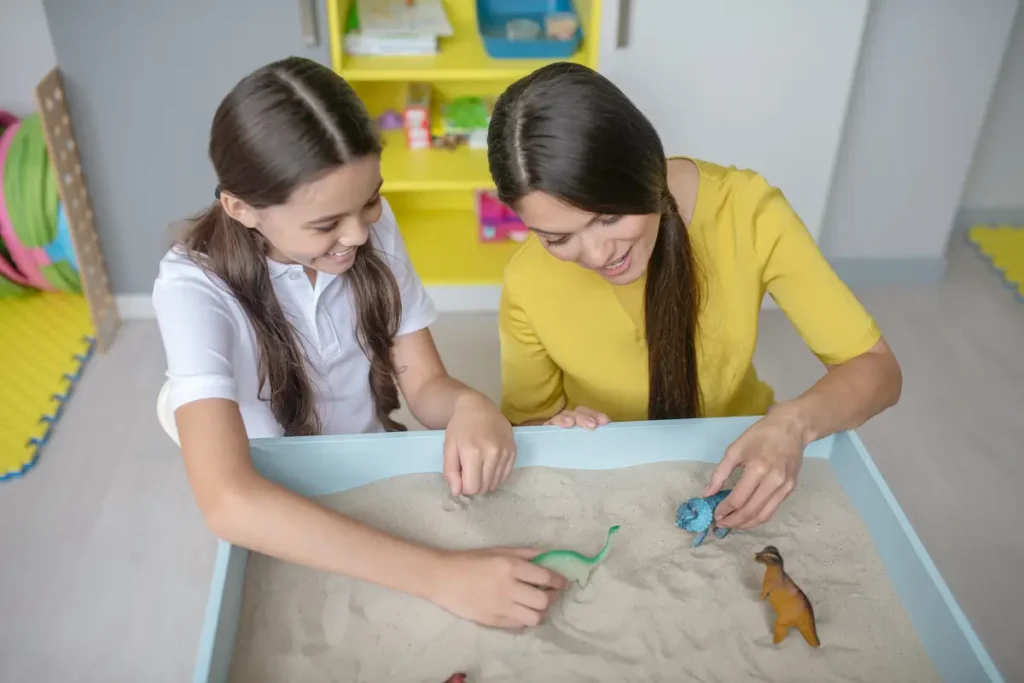
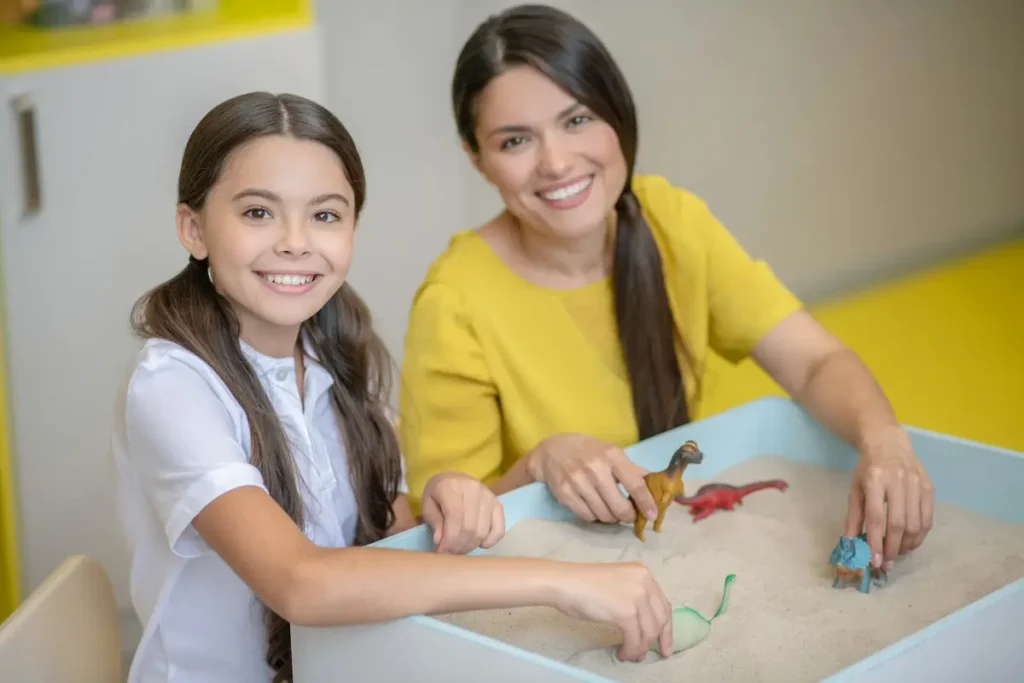
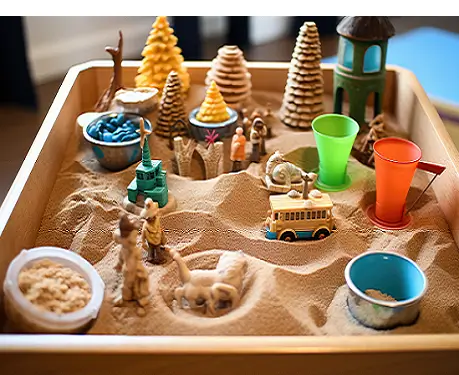
Sand tray therapy allows children to use miniature figures, objects, and sand to create scenes representing their inner world. Think of it as giving your child a canvas where they can tell their story without needing perfect words – whether in English, Spanish, or any language at all.
This approach honors the symbolic thinking present in our cultural traditions – from altares to the storytelling (cuentos) that have passed wisdom through generations. For Latino families dealing with anxiety or depression, this method transcends language barriers.
Evidence shows sand tray therapy effectively helps children who have experienced major life transitions like divorce, behavioral challenges, and family disruption. The International Society for Sandplay Therapy recognizes it as an evidence-based treatment that works across cultural differences.
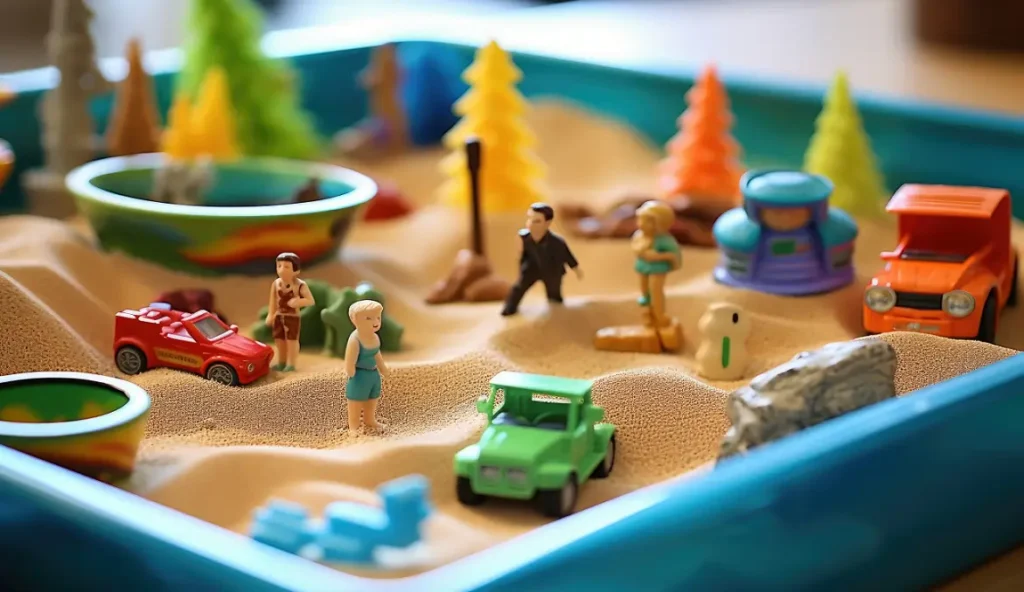
Our first sessions focus on creating absolute safety and trust. I’ll introduce your child to the sand tray room, explaining in both English and Spanish that this is their special space. There’s no right or wrong way to use the sand and figures – this is their world to build.
Your child will choose from hundreds of miniature figures – people from different cultures, animals, houses, vehicles, and symbolic items. As they build scenes in the sand, I observe with respect for what they’re creating. The magic happens in the witnessing – when children see their creations received without judgment, they naturally explore deeper emotions.
For children navigating between Latino and American cultures, the sand tray often becomes a place where they integrate different parts of their identity. Those struggling with anger or defiance build powerful scenes that help them understand and express frustration safely.
Because “familismo” is central to Latino culture, I often invite parents to understand their child’s sand tray process. With your child’s permission, we discuss the themes appearing in their work. I incorporate culturally relevant figures and objects that reflect Latino experiences – from saints and religious symbols to items representing different Latin American countries.
Family therapy approaches often benefit from sand tray work, as children can express complex family dynamics visually. This creates opportunities for improved parenting support and communication within the family system.
Children who have been acting out often experience significant behavioral improvement as they learn to express emotions through sand tray work rather than disruptive behavior. Teachers frequently report that children become more focused and emotionally regulated.
Your child will develop the ability to express complex emotions – anger, sadness, anxiety, confusion about divorce – without struggling to find words in either English or Spanish. The sand tray provides a safe container to express overwhelming emotions and gradually build confidence and hope.
Children processing divorce or complex couples counseling situations in their families can use sand tray work to express feelings about family changes. They develop coping strategies for navigating between different homes and understanding adult relationships.
Children often use sand tray work to explore what it means to be Latino in America, creating scenes that bridge their family’s traditions with their American experiences. This integration supports healthy identity development in bicultural children.
Trauma counseling through sand tray therapy allows children to process difficult experiences at their own pace. The non-verbal nature means children can work through trauma without being re-traumatized by having to verbalize experiences before they’re ready.
As your child develops emotional vocabulary through their sand work, communication with all family members often improves dramatically. This can significantly improve co-parenting relationships and reduce conflict, supporting the entire family system.
Traditional talk therapy often requires children to analyze and verbalize experiences before they’re developmentally ready. Language barriers can make this even more challenging for bilingual children dealing with depression or behavioral issues.
Sand tray therapy recognizes that healing happens on multiple levels – through the body, emotions, imagination, and spirit – not just through words. For Latino families, this approach aligns with cultural understanding of healing as a holistic process that involves the whole person and community.
Children who are acting out with defiance or struggling with behavioral issues at school often can’t articulate the pain underneath their behavior. They can show it and work through it in the sand, honoring the reality that some experiences live in the body and emotions first.
Your child carries within them everything they need to heal and grow. As their sand tray therapist, my role is to provide the safe space, cultural understanding, and gentle guidance that allows their natural resilience to emerge.
I understand the courage it takes for Latino families to seek relationship counseling or therapeutic support, especially for children. This work honors both your cultural values and your child’s individual needs, creating a bridge between traditional wisdom and modern healing approaches.
If you’re ready to give your child a voice that transcends language barriers and cultural divides, sand tray therapy offers a gentle, powerful path toward emotional healing and family connection. EMDR therapy and other trauma-informed approaches can also be integrated as appropriate for your child’s needs.
To schedule a free 15-minute consultation to learn more about how sand tray therapy can support your child and family, please contact our specialized therapists. We provide services in both English and Spanish throughout the Denver metro area, including Aurora, Westminster, Lakewood, and Federal Heights.
Denver Latino Counseling is committed to providing culturally-informed sand tray therapy that honors your family’s heritage while supporting your child’s emotional growth and healing.
Few things in a relationship are as frustrating as trying to resolve a disagreement only
As parents, our primary instinct is to keep our children safe, happy, and confident. However,
Family can be one of our strongest sources of love, support, and identity. At the
On paper, your life looks solid. You might have job security, supportive relationships, a stable
Life has a way of delivering unexpected disruptions—a breakup, the loss of a job, a
When society talks about depression, the conversation usually centers around emotional symptoms: feeling sad, hopeless,
Address:
Denver Latino Counseling
6767 South Spruce Street, Suite 215
Englewood, CO 80112
Our therapy office is conveniently located in Englewood, Colorado, just minutes from Denver, Aurora, and Centennial. We are close to Arapahoe Marketplace and a short drive from Park Meadows Mall.