

Every morning follows a familiar, exhausting routine: your child is dressed, packed, and ready for school, but right before heading out the door, they complain of a sudden, intense stomach ache. On weekends or holidays, however, those mysterious stomach pains seem to completely disappear.
If this scenario sounds familiar, your child is likely not pretending or trying to avoid school. They are experiencing somatization—a physical reaction where emotional stress and anxiety manifest as real bodily pain.
Throughout this guide, you will learn why anxiety targets the gut, how school stress affects children in Hispanic families, and how working with a Spanish speaking therapist in Denver can help your child feel confident and calm on school mornings.
The brain-gut connection: why anxiety causes stomach pain
It is easy to assume that physical symptoms require a strictly medical cause, but the gut and the brain are intimately connected through the nervous system.
The Fight-or-Flight Response
When a child feels worried or overwhelmed about school—whether due to academic pressure, social struggles, separation anxiety, or bullying—their brain triggers a threat response. Blood rushes away from the digestive system and toward major muscle groups, causing physical cramping, nausea, or a tight “knot” in the stomach.
Real Pain, Not Faking
It is crucial for parents to understand that the pain is very real. Your child is not lying or intentionally making excuses; their nervous system is genuinely sending distress signals to their digestive tract.
Warning Signs That Your Child’s Stomach Ache Is Anxiety-Related
Differentiating between a physical virus and anxiety-driven stomach pain can help you take the right steps:
- Timing Pattern: The stomach ache occurs consistently on school mornings, right before the bus arrives, or Sunday evenings, but clears up during playtimes or weekends.
- Absence of Infection Symptoms: No fever, vomiting, or other signs of illness accompany the pain.
- Reassurance Seeking: Your child repeatedly asks questions like “What if I mess up?”, “Do you have to leave?”, or “Can I just stay home today?”
- Change in Eating or Sleep: Difficulty falling asleep the night before school or refusing breakfast due to feeling sick or nauseous.
Cultural Dynamics: school stress and somatization in latino homes
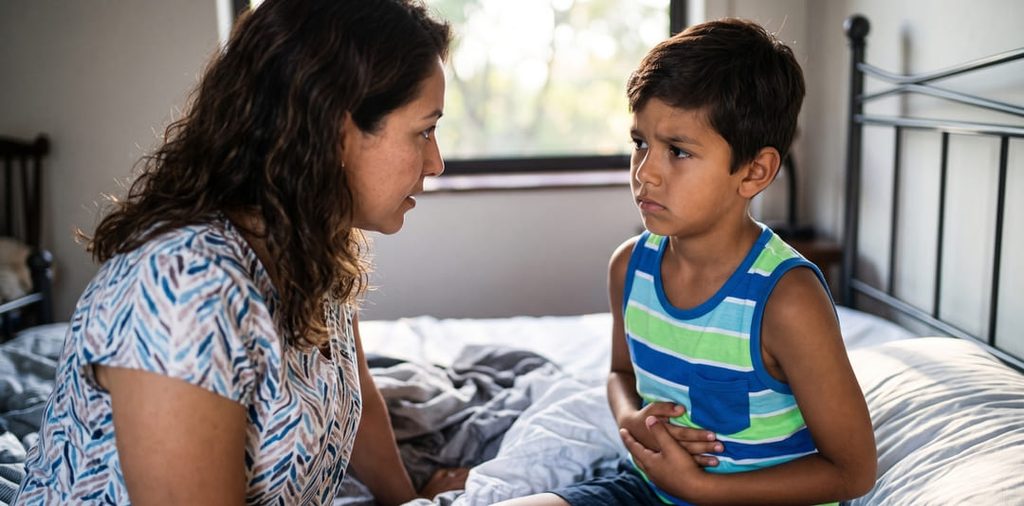
In Hispanic households, cultural perspectives influence how children express emotional distress and how parents react to physical complaints.
Somatization as a Culturally Expressed Distress (Dolor de Estómago)
In Latino families, physical ailments like dolor de estómago (stomach ache) or dolor de cabeza (headache) are often more comfortable to discuss than feelings of nervousness or worry.
Children may lack the vocabulary to say “I am feeling overwhelmed by school,” so their bodies express the stress for them.
High Academic Expectations and Migration Adjustments
Many children in immigrant or first-generation households feel immense pressure to succeed academically as a way to honor their parents’ sacrifices (sacrificios).
Balancing school expectations, language barriers, and family loyalty can create silent anxiety that manifests as morning stomach aches.
Practical ways parents can help manage morning school anxiety
You can help lower your child’s anxiety before the morning rush begins with gentle, proactive steps:
- Validate Their Physical Feeling: Avoid dismissing the pain (“You’re fine, stop complaining”). Instead, say: “I know your stomach hurts right now. Sometimes our bodies feel tight when we are worried about school, but you are safe.”
- Establish Calm Nighttime & Morning Routines: Prepare outfits and backpacks the night before to reduce chaotic morning rushing that escalates anxiety.
- Break the Day Into Small Steps: Instead of focusing on the entire school day, encourage your child to focus only on the next step: “Let’s just put on our shoes, then we’ll walk to the car together.”
- Coordinate With Teachers: Inform your child’s teacher or guidance counselor about their morning anxiety so they can offer a warm, reassuring welcome at drop-off.
Healing without a translator: why bicultural therapy matters
Addressing childhood anxiety requires a supportive environment where your child’s culture, school experience, and home language are understood. Choosing a Spanish speaking therapist in Denver ensures that your child can express feelings without cultural or linguistic obstacles.
A bilingual, culturally informed therapist helps children identify bodily sensations, build emotional regulation tools, and reframe school worries in a fun, relatable way.
If morning stomach aches are accompanied by frequent panic, fear of separation, or persistent dread, specialized parenting counseling in Denver offers comprehensive care for children and parents alike.
Overcoming stigma: supporting your child’s mental health
Seeking professional help for a child struggling with school anxiety is a powerful, loving decision that sets them up for long-term emotional resilience.
How Child Therapy Transforms School Mornings:
- Teaches Somatic Grounding: Empowers children with deep breathing and physical relaxation techniques to calm their stomach aches naturally.
- Uncovers Hidden Triggers: Identifies whether school anxiety stems from social fears, academic struggle, or separation anxiety.
- Restores Morning Peace: Helps your family transition from stressful morning arguments to smooth, confident drop-offs.
Take the next step toward lasting peace

Denver Latino Counseling provides compassionate, bilingual, and culturally specific therapy tailored for children, teens, adults, and families.
We specialize in treating school anxiety, physical somatization, behavioral challenges, and generational stress using evidence-based care that respects your values and your heritage. We proudly serve families throughout Denver, Aurora, Commerce City, Thornton, Westminster, and Littleton.
To ensure quality mental healthcare remains accessible to our entire community, we proudly accept Medicaid (Aceptamos Medicaid) and offer flexible payment options for all families.
Contact Us Today Schedule your free 15-minute consultation — en español o inglés.
No tienes que cargar este peso solo. Estamos aquí para ayudarte. You don’t have to carry this weight alone. We’re here to help.
If you are looking for specialized therapy for kids in Denver, Denver Latino Counseling is here to help.

Vanessa Richards, LPC is a bilingual psychotherapist with 18 years of experience helping children, teens, adults, couples, and families overcome trauma, anxiety, depression, and relationship challenges. She specializes in EMDR and IFS to help clients build resilience and emotional well-being.