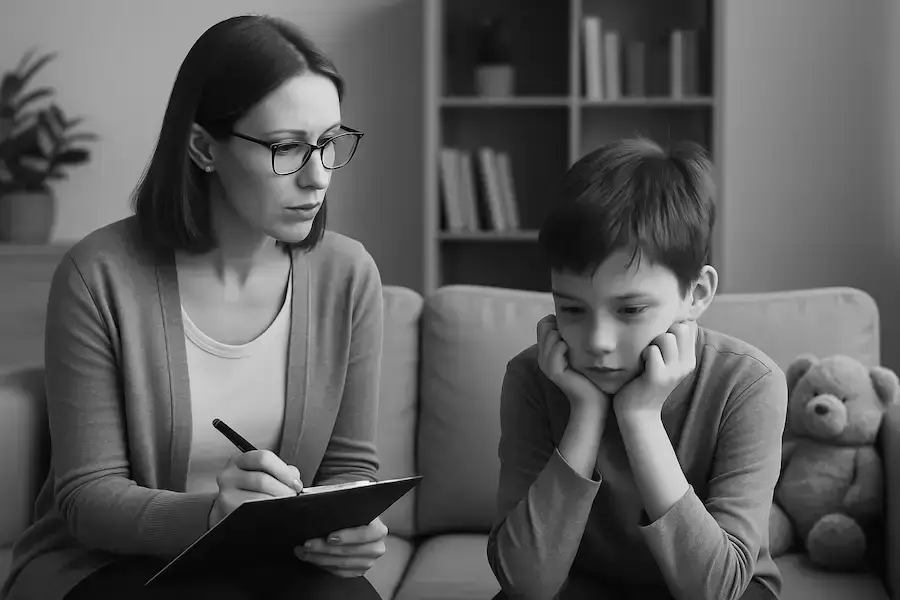

It can be worrying when you receive a call from school because your child had a problem with one of their classmates or because of an aggressive act even against their teacher. This may be a consequence of mishandling his or her anger, but there is no reason to be alarmed because he can learn to control his anger and avoid more calls for attention.
While it is true that we do not like our children being scolded at school, we must take the situation as part of the experience of parenting. And it is best to help our children understand more about emotions, being mindful of them, and teach them how they can learn to control their reactions if they set their mind to it.
How to react effectively to the behavior of our children?
When a situation such as anger is present in children one tendency is to ignore the situation. We think that it may be a tantrum or bad behavior, and that it will go away, but it is important to notice if our children really know how to control their reactions when the emotion comes, especially if it is an emotion as strong as anger.
Another tendency is to react with frustration or stress. To begin to solve this problem with our children, it must be clear that it is not an act of rebellion or that it is not “on purpose”, but rather it is part of their learning. It must be considered that aggressiveness with aggressiveness cannot be corrected. We should try to react or discipline our children when we are calm.
We should try to use a friendly tone when talking about what happened to our child. 70% of our communication is not verbal. Our gestures, tone of voice, intensity, volume and facial expression communicates more to our child that the content of what we are saying. If our child perceives our frustration or stress they will get defensive or they will shut down.
When our children are stressed or afraid they don’t process information as if they are calm and relaxed. What we intend to communicate won’t be received by our children if we are stressed out or frustrated. If you as a parent feel stressed out is better to take care of yourself and wait until you feel calm and in control to address the issue with your child.
The first step is to understand that anger is an emotion that both children and adults can experience. It’s normal to feel it. We can teach them to notice it and ride it through, like a wave. It will pass. Children can be taught with patience, tolerance, reflecting and modeling for them. They can understand that their aggressive behavior is not the most appropriate but they can learn other ways. They can learn to wait before they act. They can learn to express their anger in a healthier way. Talk about how they feel and what they need. They can learn to be assertive instead of aggressive and be in control.
Mom: “Oh! you seem to be getting stressed out or even mad. You must have had a tough time at school.” (Reflecting)
Child: It was hard. (child starts to connect the emotion to their sensation)
Mom: “It seems you need your space to calm down. Or do you need a hug I wonder?”
Child: Starts to cry and hugs his mom.
Then when he’s calm you can start to talk about what happened at school feeling safe that his mother will listen and try to understand him. Then both can explore solutions together.
If he wants space, that’s fine, too. It’s important to honor what he needs. He’s learning.
Rage as well as joy, grief, surprise, fear, anger, shame or other emotion can sometimes make us feel uncomfortable. Our children will feel it, and is part of growing and developing as human being. The important thing is to teach our children how they can handle strong emotions, such as anger.
Anger can manifest itself in aggressive acts. It can be scary for our children to feel intense emotions such as anger. Most of the times they don’t understand what’s happening. They need us to help them understand what’s going on and then regulate their big emotions. We are their external regulators. They don’t know how to do it and need us to help them calm down. We can help them notice what’s happening. That it is okay and that we are going to be there to help them feel better. There’s nothing wrong with them. It’s normal.
It’s okay to feel our feelings
We must teach our children a vocabulary of emotions. To teach them, we can use reflection. We reflect what we think they are feeling at any given moment. “I notice you are getting stressed out right now”
If they learn to identify what emotion they feel then it will become easier for them to express how they feel. We should encourage them and praise when they are able to. It’s a good idea to model to them and express how we as parents feel sometimes. It’s okay to feel our feelings and express them.
We must teach them that we cannot choose the emotions we feel, but we can choose what we do with them.
We can teach them to be mindful and notice what emotion they feel, how they feel it in their bodies. Then to express how they feel to you. Once the child has said that he feels upset, we can teach them to calm down and let the emotion pass in order to act. We can teach them to breath deeply and notice how their bodies relax. It’s like a wave. The emotion comes and the emotion goes. It doesn’t stay with us. We just need to sit with the emotion. We can drink a cup of tea with the emotion. Then everything will be okay. They can also talk to their brains. “Everything will be fine” “It will pass” “I can do it”
They can ask for what they need. Do they need space? Do they need a hug? Do they need to tell us what happened? Do they need to breath deeply? Do they need to take a walk? Do they need us to tell them that everything will be fine while holding their hands?
Their brain is learning that there are other ways to deal with these Big emotions other than being aggressive. Then they can choose what they want to do. And there you go! That Big emotion is not that big anymore. It’s gone. They won that battle over anger. Hi Five!
Let’s prepare for the next battle.
If you need more support navigating this situations with your child therapy for children can help you.




Vanessa Richards, LPC is a bilingual psychotherapist with 18 years of experience helping children, teens, adults, couples, and families overcome trauma, anxiety, depression, and relationship challenges. She specializes in EMDR and IFS to help clients build resilience and emotional well-being.