

Every parent is familiar with the moments when a child wants an extra hug, holds your hand a little tighter during a busy event, or asks you to stay in their room for five more minutes at bedtime.
These are beautiful signs of a secure attachment. However, when a child suddenly becomes intensely attached—crying when you leave the room, refusing to go to school, or following you like a shadow around the house—it can leave caregivers feeling deeply exhausted.
Throughout the following sections, we will explore why extreme clinginess is rarely a sign of bad behavior, how unique cultural transitions overwhelm our youth, and how specialized family support can bring peace back to your home.
Why does emotional overwhelm make my child overly attached?
When a child exhibits intense clinginess or refuses to leave their caregiver’s side, it is not a conscious decision to manipulate you or misbehave. It is a biological survival response triggered by an overloaded nervous system.
Children have a limited emotional vocabulary. When they experience severe stress, environmental shifts, or big worries, their internal alarm system kicks into a state of high alert (hipervigilancia).
Unable to express this invisible panic in words, their survival brain directs them to seek absolute proximity to their primary source of safety: you.
The intense clinginess is actually a non-verbal cry for help, a physical attempt to co-regulate their nervous system with yours because they feel completely unable to handle their internal world alone.
How do Hispanic cultural shifts amplify childhood stress?
In Hispanic households, children navigate a unique set of cultural expectations and unwritten societal rules that can accidentally deepen their internal overwhelm.
The clash of bicultural identity and “el qué dirán”
Latino youth frequently walk between two completely different worlds: the American school system and a traditional Hispanic home.
They must meet high academic standards while honoring deep generational guidelines like absolute obedience and family respect (respeto).
When a child feels crushed by the pressure to be the “perfect son or daughter” to justify their family’s immense sacrifices (echarle ganas), their stress builds silently.
Afraid of community judgment (el qué dirán) or being labeled as a malcriado, they compress their stress until it erupts as extreme attachment.
Silent absorption of parental stress
Our community places a massive value on hard work, meaning parents often work extended hours or balance immense systemic stress to provide a stable future.
Children are emotional mirrors; they implicitly absorb the unspoken tension, displacement trauma, or financial worries carried by the adults in the home.
Because traditional rules often dictate that family adult issues stay private (los trapos sucios se lavan en casa), children don’t understand the heavy atmosphere, which dysregulates their nervous system and makes them cling to you out of fear of losing stability.
What are the warning signs that my child is emotionally overloaded?

When emotional overwhelm manifests as deep separation distress, it impacts your child’s behavioral development, school attendance, and the emotional environment of your entire home.
Red flags to watch for in your child’s routine:
- Regression in independence: Sudden daytime mood swings, refusing to sleep alone, wetting the bed after being fully trained, or throwing intense tantrums over minor separations.
- School avoidance: Intense panic or frequent somatic complaints, such as stomach aches and unexplainable vomiting, specifically on school mornings or before social activities.
- Hyper-vigilant monitoring: Constantly checking where you are in the house, asking repetitive questions about when you will return, or crying intensely if you look away.
If you recognize this cycle of panic and physical exhaustion in your household, addressing it early can provide a structured roadmap to restore emotional safety.
How to support an overwhelmed child at home
Helping an overwhelmed child regain their independence requires immense patience and steady co-regulation. You can implement these practical, supportive habits today:
- Validate the fear before leaving: Avoid sneaking out of the house, as this destroys trust and increases hyper-vigilance. Instead, look them in the eyes and say: “I see you feel scared right now, and that’s okay. Mommy always comes back. I love you.”
- Practice somatic co-regulation: When your child is melting down, your angry reaction will only confirm to their brain that they are in danger. Take three deep breaths, lower your voice, and offer a firm, silent embrace to ground their nervous system.
- Establish predictable routines: Build visual or spoken schedules for transitions like mornings and bedtime. Predictability is the ultimate antidote to an anxious, overwhelmed mind.
- Protect their sleep environment: Limit exposure to loud media and stressful adult conversations before bed. Lowering the external noise allows their brain to settle into restorative rest, building true amor propio (self-love) and confidence.
When should I seek therapy for my child’s emotional overwhelm?
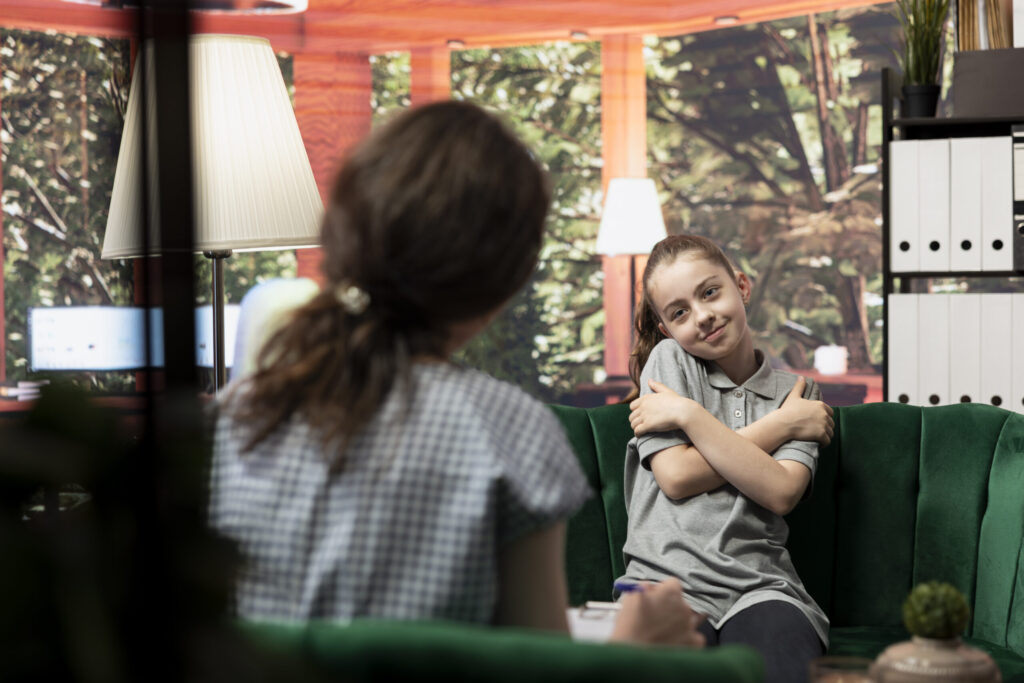
Many parents wait until their child is completely refusing to enter the school building or experiencing severe panic attacks before seeking professional guidance.
However, addressing these behavioral cries for help early is not a sign of failure; it is a healthy act of leadership for your family’s future.
Choosing a bilingual therapist in Colorado ensures your child can express themselves in a space that honors their bicultural reality without losing anything in translation.
Utilizing specialized play therapy provides a creative, safe environment where children can process their big emotions through metaphors and play.
Because toys are a child’s words and play is their language, this approach allows them to externalize their internal overwhelm, process family transitions, and build the confidence they need to step away from your side and explore the world with absolute safety.
Take the next step toward your family’s peace
Denver Latino Counseling provides compassionate, bilingual, and culturally responsive therapy tailored for children, teens, adults, and families.
We specialize in child behavioral challenges, emotional overwhelm, and family transitions with evidence-based care that respects your culture, your heritage, and your values.
We proudly serve families throughout Denver, Aurora, Commerce City, Thornton, Westminster, and Littleton.
To ensure quality mental healthcare remains accessible to our entire community, we proudly accept Medicaid (Aceptamos Medicaid) and provide flexible payment options for all families.
Contact Us Today Contact us today to schedule your free 15-minute consultation — en español o inglés.
No tienes que cargar este peso solo. Estamos aquí para ayudarte. You don’t have to carry this weight alone. We’re here to help.
If you are looking for child support or play therapy in Denver, Denver Latino Counseling is here to help.

Vanessa Richards, LPC is a bilingual psychotherapist with 18 years of experience helping children, teens, adults, couples, and families overcome trauma, anxiety, depression, and relationship challenges. She specializes in EMDR and IFS to help clients build resilience and emotional well-being.