
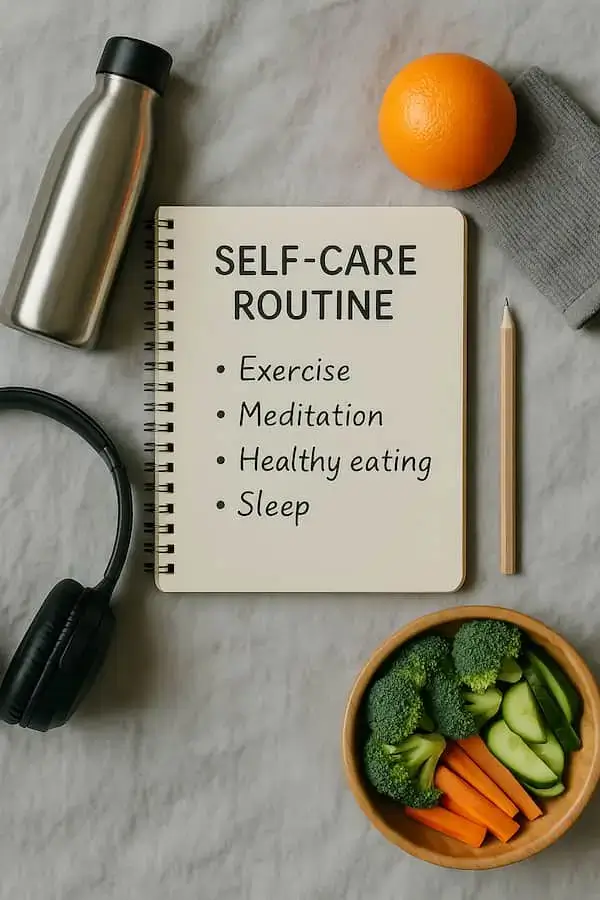
Anxiety is a natural emotional response to situations perceived as threatening or challenging. However, when it becomes constant or interferes with daily life, it can turn into a debilitating disorder that affects physical, mental, and emotional health. Psychological therapies such as Cognitive Behavioral Therapy (CBT), Acceptance and Commitment Therapy (ACT), or Mindfulness-Based Stress Reduction (MBSR) have proven to be highly effective in treating anxiety. But to make therapy more effective and sustainable, it is essential to accompany it with a self-care routine that reinforces progress and promotes emotional stability.
This blog explores how to build a comprehensive self-care routine that supports your therapeutic process, strengthens your resilience, and fosters long-term well-being.
1. Why is self-care key in treating anxiety?
When experiencing anxiety, the body and mind are in a constant state of alert. This leads to emotional exhaustion, muscle tension, sleep disorders, and catastrophic or disproportionate thoughts. While therapy provides effective tools to manage these symptoms, daily self-care is what allows these tools to be integrated into real life.
Self-care is not a luxury or an indulgence; it is a basic mental health need. Investing in activities that recharge your emotional, physical, and mental resources helps create a solid foundation on which therapy can work more efficiently.
2. Principles for building an effective self-care routine
Before suggesting concrete actions, it’s important to consider the following principles:
- Regularity and consistency: Self-care works best when it is part of a routine, not when it is done sporadically.
- Adaptation to your personal needs: Not all tips will work equally for everyone. Ideally, you should experiment and find what suits you best.
- Small sustainable steps: It’s better to start with simple, consistent habits than with large, unachievable goals that lead to frustration.
- Connection to your values: Self-care practices should align with what matters to you and gives your life meaning.
3. Key components of a self-care routine for anxiety
A. Physical care
Anxiety affects not only the mind but also the body. Addressing the body from a compassionate perspective helps reduce the intensity of anxious symptoms.
a.1. Restorative sleep
Insufficient or interrupted sleep feeds anxiety. To improve it:
- Set a fixed time to go to bed and wake up.
- Reduce screen use at least 1 hour before bed.
- Avoid caffeine or stimulants in the afternoon.
- Create a relaxing nighttime routine (warm bath, quiet reading, soft music).
a.2. Conscious eating
Anxiety can lead to overeating or lack of appetite. Establishing a balanced diet helps stabilize your emotional state.
- Avoid excessive refined sugars and ultra-processed foods.
- Include foods rich in tryptophan, omega-3, magnesium, and B vitamins (fish, nuts, legumes, green vegetables).
- Practice mindful eating: eat slowly, without distractions, paying attention to flavors, textures, and fullness cues.
a.3. Regular physical movement
Physical activity releases endorphins, reduces muscle tension, and improves mood.
- Aim for at least 30 minutes of exercise 4 times a week.
- Choose activities you enjoy (walking, swimming, yoga, dancing, biking).
- Include movement breaks during your day to stretch and breathe.
B. Emotional care
Emotional exercises help not only to reduce symptoms but also to recognize and understand what you’re feeling.
b.1. Emotional journaling
Writing about your emotions helps you process them, identify patterns, and recognize what you need.
- Write at the end of the day about what you felt and what triggered it.
- Don’t judge your emotions; just observe and name them.
b.2. Emotional regulation
Anxiety tends to intensify emotions. Practicing regulation strategies helps maintain balance.
- Breathing techniques (4-7-8 breathing, diaphragmatic breathing).
- Grounding exercises (anchoring yourself to the present with your five senses).
- Guided visualizations of safe places or relaxing scenes.
b.3. Self-compassion
Constant self-criticism fuels anxiety. Changing your internal dialogue to a kinder one transforms your emotional experience.
- Talk to yourself as you would to a friend going through a hard time.
- Acknowledge your achievements, no matter how small.
- Accept your emotions without fighting them.
C. Mental care
The anxious mind tends to overanalyze, anticipate catastrophes, or get trapped in worry loops.
c.1. Mindfulness meditation
Mindfulness trains the mind to return to the present and stop feeding anxious thoughts.
- Dedicate 5 to 15 minutes daily.
- Observe your breath, sounds, body sensations.
- Don’t try to “empty the mind”—just observe without judgment.
c.2. Challenging distorted thoughts
CBT encourages questioning the truth and usefulness of anxious thoughts:
- What evidence supports and refutes this thought?
- Am I making a catastrophic prediction?
- What would I say to a friend thinking this?
c.3. Limit exposure to stressful information
Information overload (news, social media) increases alertness.
- Set schedules to check news or social media.
- Choose reliable sources and avoid sensational content.
- Replace some screen time with relaxing reading, nature, or art.
D. Social care
Isolation fosters anxiety. Although social contact can seem overwhelming during tough times, it is an essential pillar of well-being.
d.1. Meaningful connections
It’s about quality, not quantity.
- Prioritize people with whom you can be yourself.
- Practice active listening and authentic emotional expression.
- Seek support when needed: you are not alone.
d.2. Setting healthy boundaries
Part of social self-care is saying “no” to relationships or dynamics that drain you emotionally.
- Set your boundaries clearly and assertively.
- Remember: setting boundaries is not selfish—it’s protection.
d.3. Support groups or group therapy
Sharing experiences with others going through similar processes brings relief, belonging, and collective coping strategies.
4. How to integrate self-care with therapy
Your therapist can help you structure a personalized self-care routine that complements your sessions. Some strategies include:
- Keeping a log between sessions of what practices work.
- Identifying days or times when anxiety is highest and reinforcing those with protective activities.
- Setting small goals and reviewing them with your therapist.
- Using self-care as a resource between sessions during crisis moments.
5. Common barriers to self-care (and how to overcome them)
“I don’t have time”
Self-care doesn’t require hours daily. Even 5 minutes of deep breathing or 10 minutes of walking can make a difference. It’s about priorities.
“I feel guilty taking care of myself”
Guilt is common, especially in caregivers or perfectionists. Remember: you can’t give your best if you’re not well yourself.
“I don’t know where to start”
Start with one simple action you can repeat daily. Habits are built with consistency, not perfection.
6. Sample daily self-care routine for anxiety
Morning:
- Conscious breathing upon waking (2 minutes).
- Mindful shower.
- Nutritious breakfast without screens.
- Review of agenda with a compassionate attitude.
Midday:
- Brief walk outdoors.
- Lunch without rush or distractions.
- Journal writing (3–5 minutes).
Afternoon:
- Exercise or stretching.
- Social connection time (call, message).
- Review anxious thoughts and use cognitive challenges.
Evening:
- Light dinner.
- Quiet reading or relaxing music.
- Bedtime routine (no screens, slow breathing, gratitude).
Final Thoughts
Anxiety can feel overwhelming, but it doesn’t have to define your life. Therapy provides the tools to understand and heal, while a well-built self-care routine acts as the net that holds that process. It’s not about doing everything perfectly, but about taking care of yourself with intention, kindness, and perseverance. Step by step, habit by habit, you can build a safer, calmer, and more resilient inner space.
Because you deserve to feel well—not just when anxiety is absent, but even while facing it.

Vanessa Richards, LPC is a bilingual psychotherapist with 18 years of experience helping children, teens, adults, couples, and families overcome trauma, anxiety, depression, and relationship challenges. She specializes in EMDR and IFS to help clients build resilience and emotional well-being.